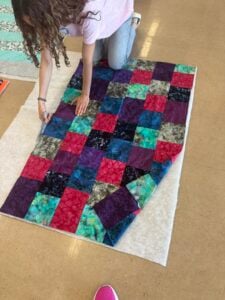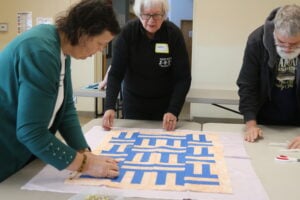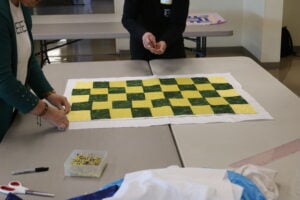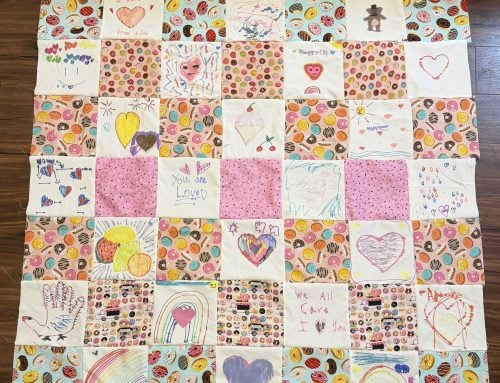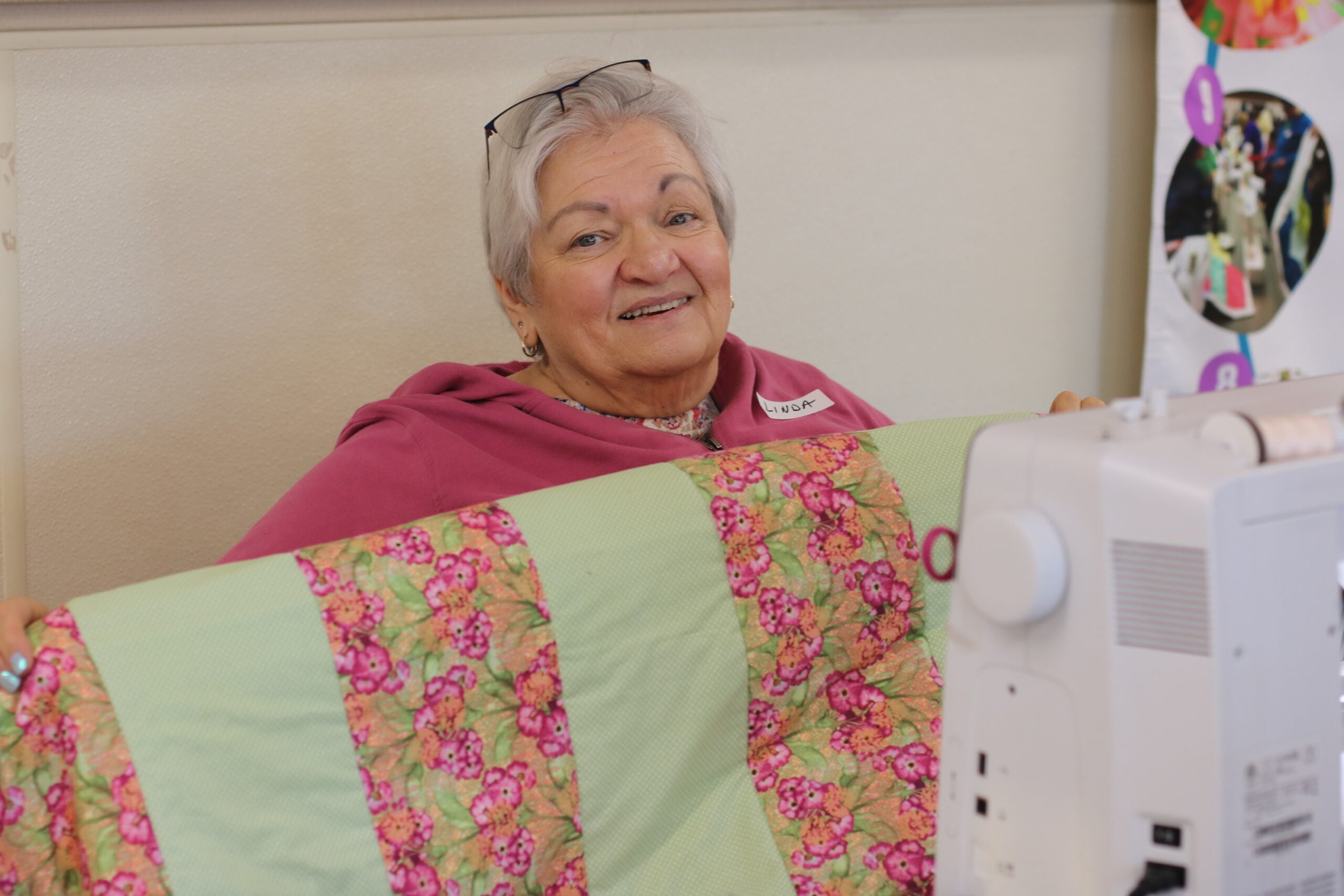
Stripping is one of our quickest types of binkies to make. We do them at Bink-A-Thons all the time to create beautiful, simple color palettes. Our volunteers use 6 to 10 six-inch strips to make the binkies. But what about taking it a step further? Cutting up those beautiful strips in pairs or lines of four to create a new version of our simple binky?
The logic behind that idea comes straight from quilting. Strip piecing is the technique of sewing long strips together first, then cutting the joined strip set into smaller segments. It is the same shortcut our volunteers already use to build a binky fast. The only difference is what happens after the strips are joined. Instead of stopping there, quilters resize and re-cut the set to open up new patterns.
Amy Smart of Diary of a Quilter recently published a post on strip piecing that walks through this next step in detail, with tips on stitch length, pressing, and keeping strips from bowing as you sew. Read the full post here: How to Save Time and Improve Accuracy with Strip Piecing.
A few ideas from the post translate especially well to binkies:
Mixing strip widths. Instead of uniform strips, varying the width of each strip before joining gives the binky a more playful, less predictable pattern while keeping the piecing just as fast.
The Modular Quilt Pattern. This layout combines squares and rectangles cut from the same strip set. It is an efficient way to use fat quarters, and it gives volunteers a second binky style to work from using fabric they already have cut.
We have tried a few of these variations at recent Bink-A-Thons.
Have you strip-pieced a binky with a twist? Send us your photos. We would love to see them.